Ducati Desmo450 EDS review: More than just a cyclocross bike with lights
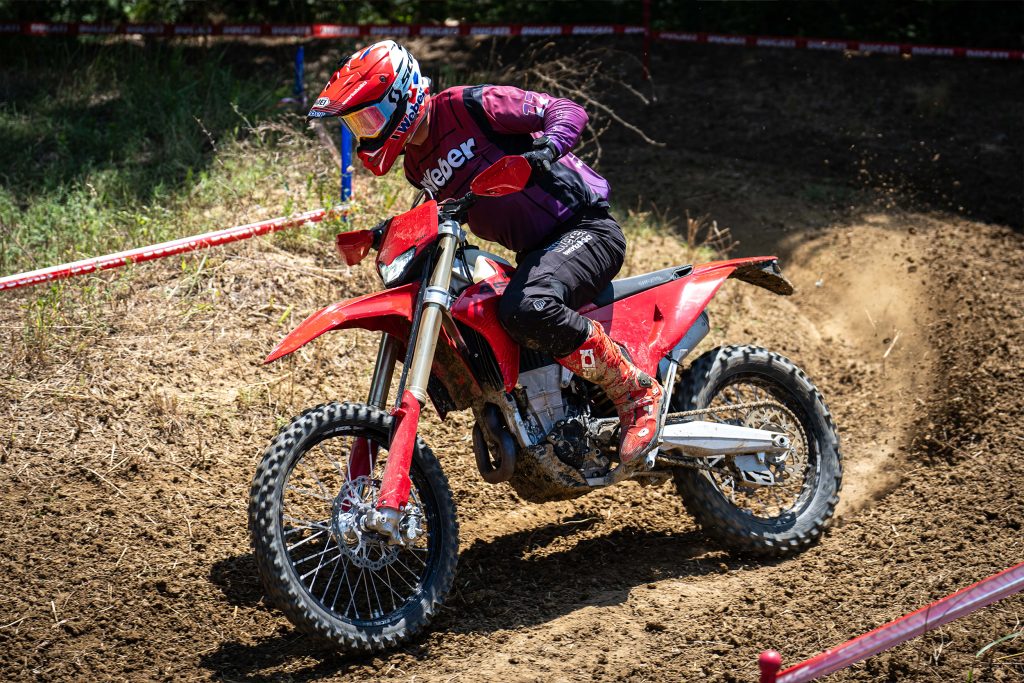
Our test rider Sebastian Wolter with the Ducati Desmo450 EDS. / Photo: Alex Photo
With the Desmo450 EDS, Ducati is launching its first sport enduro motorcycle. The Italians didn't take the easy way out. Instead of simply equipping the familiar motocross version with lights, softer suspension components, and a six-speed gearbox, the motorcycle was specifically further developed for enduro use.
Our test rider Sebastian “Busty” Wolter put the new Ducati through its paces on three different sections around the Faenza motocross track. The program included a cross test, a classic enduro section, and a tighter course with artificial obstacles.
Not a converted motocross bike
Although the Desmo450 EDS is based on the 450cc motocross bike, Ducati has retuned numerous areas. The frame and Showa suspension components were adopted, but received a specific enduro setup.
The engine also underwent significant changes. The intake system was redesigned, the throttle valve diameter was reduced from 44 to 42 millimeters, and the flywheel, crankshaft, and camshafts were also adapted to the new application.
It also features a six-speed gearbox. First gear is very short, while second and third gears are designed for versatility. The long sixth gear is intended for fast driving, stretches of road, and transfer stages.
The engine is impressive across the board.
The engine was one of the Ducati's strongest points during the test. Power delivery is exceptionally smooth, while ample torque is available even at low revs. This allows the 450 to be ridden in a higher gear through tight corners without feeling hesitant or sluggish.
Despite the smooth throttle response, there's no shortage of power in the upper rev range. The single-cylinder engine revs freely and remains comparatively quiet. Especially at high revs, there are significantly fewer unpleasant vibrations than you might expect from some other 450cc motorcycles.
This broad range of uses makes the engine particularly interesting for classic enduro special stages. Slow, controlled riding is just as possible as powerful acceleration on fast and open sections.
Electronics is one of its greatest strengths.
Ducati offers two pre-installed engine mappings that can be further customized via the smartphone app. Additionally, engine braking, traction control, and the quickshifter can be adjusted or activated.
The softer mapping worked particularly well in the dry and slippery conditions at Faenza. The engine responded very smoothly and could even be started using only the clutch, without needing to apply any additional throttle.
The traction control is adjustable in four levels and operates very discreetly. Depending on the selected setting, it intervenes more or less strongly without compromising the feel for the rear wheel. This allows the rider to precisely choose the level of support that suits their riding style and the specific road conditions.
The quickshifter also makes riding easier. Since less clutch work is required when upshifting, the left hand is relieved. This can make a noticeable difference, especially on longer special stages.
The chassis reacts noticeably to small changes.
At the start of the test, the motorcycle's balance was not optimal. The negative suspension travel was above the recommended value. After correction, the Ducati felt significantly more balanced and handled better in ruts.
The Desmo450 EDS is generally stable on fast stretches and handles tight corners well. However, there are 450cc bikes that feel a bit more agile, while others offer even greater composure at high speeds.
With the Ducati, it's therefore worth investing time in setup. Even small changes to the fork sag, fork height, or clickers noticeably alter the riding feel. Different linkage lengths could also be interesting for ambitious riders.
The Showa components certainly provide a good foundation. The crucial thing is to properly adjust the motorcycle to the rider's weight, speed, and intended use.
Ergonomics largely successful
The freedom of movement on the Ducati is just right. The motorcycle doesn't appear noticeably long or particularly short, and even taller riders don't feel cramped.
The line between the seat and the tank takes some getting used to. The front section rises more sharply than on some competitors. Riders who want to lean far forward in tight corners will therefore have to actively work at it and consciously position themselves accordingly.
The long gearshift lever also stood out during testing. With a shoe size of 43 (EU), Busty sometimes had to push his foot unusually far forward to shift smoothly. Changing the lever position only provided limited improvement. Furthermore, the gearshift lever and foot brake are not entirely symmetrical.
The integrated frame protectors were significantly better received. Their grippy surface improves the rider's hold on the motorcycle. Further versions with varying levels of grip will also be offered as accessories.
High-quality standard equipment
Ducati uses familiar components for the equipment. These include Brembo brakes, Galfer brake discs, an oversize handlebar, Domino lock-on grips, Metzeler Six Days Extreme tires and an 18-inch rear wheel.
The transparent tank holds 8,5 liters. A skid plate, handguards, and protective covers for the clutch and ignition covers are also fitted as standard. A linkage guard was not yet available at the time of testing but, along with other protectors, is under development.
Long service intervals
Ducati specifies relatively generous maintenance intervals. Oil and oil filter should be changed every 15 operating hours. The first piston replacement is scheduled after at least 90 hours; this period can be extended further under lower loads.
A major engine overhaul is scheduled after approximately 180 hours. The actual timing depends on how hard the motorcycle is used. For a modern 450cc sport enduro, these are practical figures designed to keep maintenance costs manageable.
Conclusion
The Ducati Desmo450 EDS is much more than just a motocross bike with lights and a side stand. The engine, gearbox, electronics, and chassis setup have all been specifically adapted for enduro use.
The engine is particularly impressive. It's smooth and controllable, offers plenty of torque, and still revs high. Added to that is an electronics system that not only looks good on paper but actually provides support on slippery surfaces.
Careful tuning of the chassis is worthwhile. Even small changes can significantly improve the balance. The ergonomics, with its rising seat-tank line and long gearshift lever, also present some challenges that might not suit every rider immediately.
In summary, the Desmo450 EDS is a high-quality, versatile sport enduro motorcycle. Its strengths lie primarily in fast special stages, classic enduro loops, and wide-open tracks. A 450cc bike would rarely be the first choice for extreme hard enduro anyway.